
Route card: turning back at the exposed slab
November 11, 2026
The lower pitch offers three places to set protection, but only the last one leaves a comfortable stance for inspecting the exposed slab. From that stance, the climber can look for a dry seam and judge whether the wind has changed.
Write the return before leaving the stance
The exposed slab looks easier from a distance than it feels at the stance. Sketch the foot line and the place where the protection disappears around a shallow edge. The player should see what changes between those two views, even if they choose to continue.
Test the decision
Keep the last secure point on the card after the climber passes it. A route preview that shows only the next move makes retreat seem like an interruption. Knowing which anchor is still reachable makes it part of the decision.
Run the approach twice with the same weather. In one run, climb to the far edge before the retreat cue appears. In the other, show the choice before leaving the stance. Compare whether the player can explain both the route they declined and the way they selected to descend.
Describe what makes the slab reversible
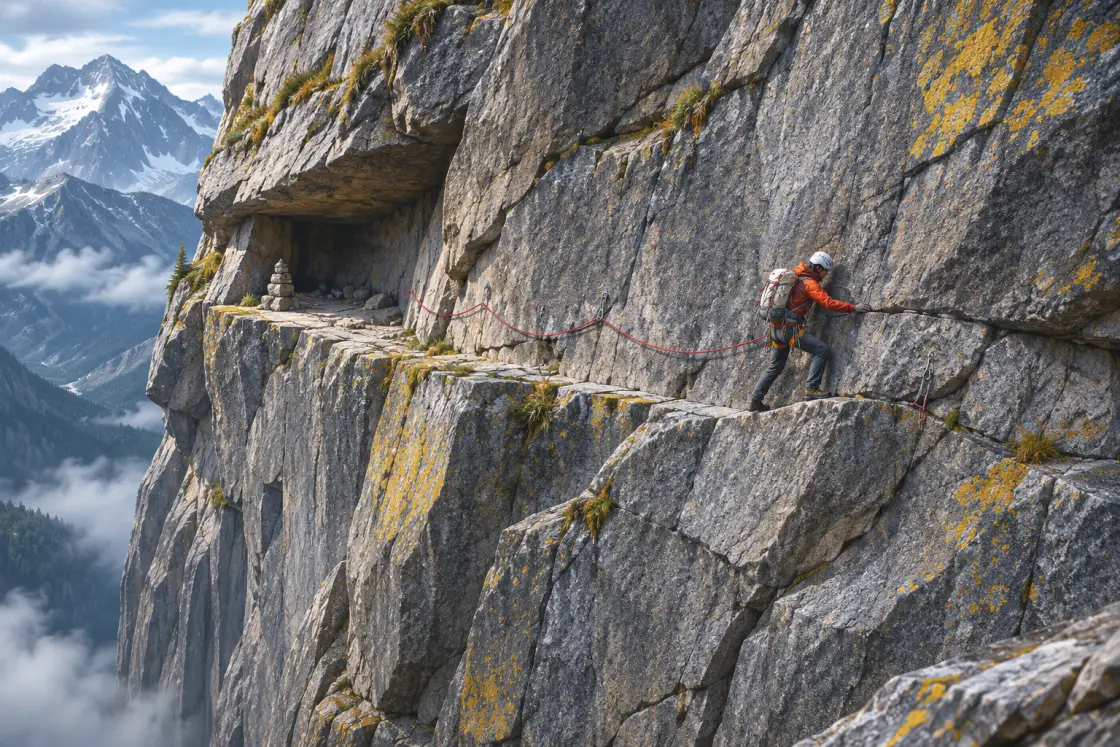
Use a side-on view to show the last anchor and the first move away from it. A route can look flat in an image taken from below, making it hard to see the gap between the two positions. The sketch can show the reach of the move and where the previous stance drops out of view without pretending to be real climbing instruction.
Try a run where the player sees a change in the surface before reaching the middle of the slab. They can use the marked return or continue toward a narrow sheltered place. If the return cue is hidden by the camera, the player may continue because it is the only direction the game clearly shows. Improving that cue can make the cautious decision as understandable as the outward one.
Review where the retreat began. A return from the first move may preserve most of the route options, while turning back later may ask the player to pass an awkward edge. The card can describe those outcomes as different cases. That makes it useful to discuss what was known at the time of the decision, rather than judging the return entirely by how far the climber went.
Add a replay from a lower camera angle so the top of the slab is partly hidden. The return can still be described by the secure stance and the last visible edge. If the decision depends on seeing the far end of the slab, the cue has been placed too late for that angle. An early view should show the cost of committing while the player can still compare it with the lower route.
A final replay can place the safe stance just outside the first camera view. The player should still be able to locate it through an understandable relationship to the slab. An illustration from the return angle may communicate that connection more clearly than another view from below. The test is whether a reader can describe the route back before leaving the anchor.
Explore Above the Cloud Line for the design context, or read the next study for a related decision.