
Above the Cloud Line
Read the pitch from the last secure stance
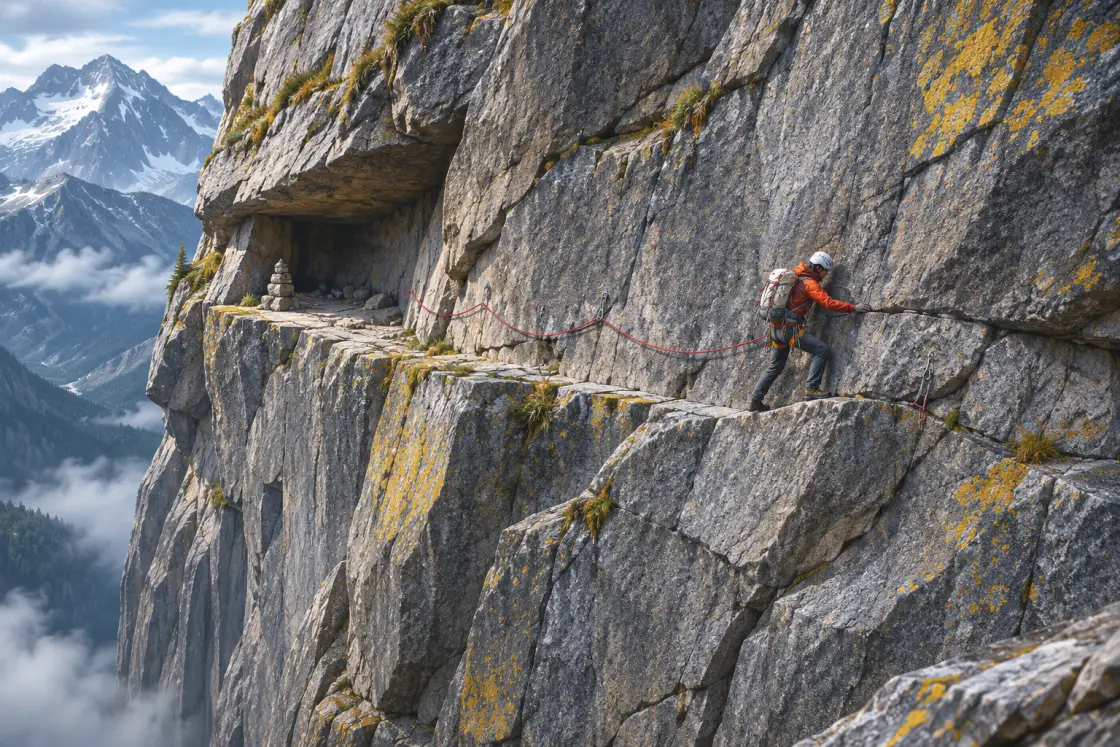
The climb begins on a familiar ridge above the last strip of cloud. The summit looks close, but the next stance is hidden by the bend in the rock. The route offers more than one path and each asks the player to spend time or protection before seeing what comes after it.
Plan the next move
Check the next few moves, select where to place protection and keep enough margin for a return. From the next stance, review what the rock and sky are telling you. A route that was reasonable earlier may become difficult to reverse once the wind shifts or the surface goes into shadow.
World and visual direction
The art studies use broad planes of granite, visible fractures and limited colour in exposed sections. Shadow has to show depth while leaving the outline of a hold readable. Protection points belong to the structure of the rock instead of floating above it as markers.
What the design has to explain
We want to make a well-judged retreat understandable and worthwhile. The route card shows the decision where descent is still possible and carries that information into the next pitch. An outcome should depend on what a player saw and kept available.
Development status
Above the Cloud Line is an unreleased concept. The present studies focus on reading a pitch, finding a protected stance and communicating a change in weather before it removes an option.
Compare two plans from the lower stance
The lower stance offers a view of two lines. The direct one reaches a ledge quickly, but it puts the next protection point out of view as the climber moves around a corner. The longer line keeps that point in sight and uses more of the available time. The card records both routes before the player steps away from the last place where it is easy to change the plan.
Repeat the scene with a patch of cloud moving across the ledge. The short line remains physically possible, but a high landmark is no longer reliable. A player who looked for a lower crack or a shadow line can check where to turn. A player who did not can still choose to wait or return without losing all the information gathered on the approach.
After each attempt, show where the player stopped, which evidence they could still see and what made the next move reasonable at that moment. A clear review lets someone understand a cautious choice even when a more direct line existed. The goal is to make the mountain readable through observations and trade-offs, with room for a player to revise a route before a change in conditions makes the decision for them.
The route record can make the last readable point available during descent, when the next view of the ridge may no longer resemble the original approach.
See The Sheltered Notch for another design study, or read the related development note.