
How the sheltered notch changes the pitch
November 11, 2026
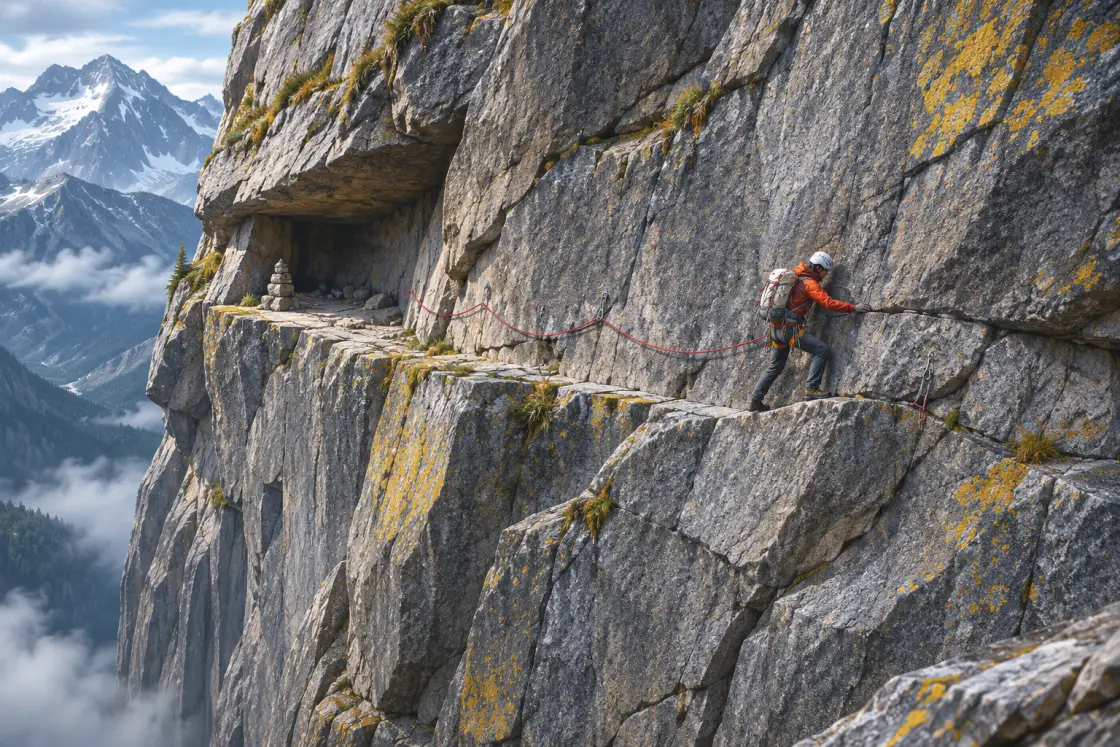
The sheltered notch sits below the upper traverse. It gives the climber a place to stop and watch the direction of the wind before stepping out onto the open face.
We are testing the notch as a decision point. From there, the player can see both the dry seam ahead and the anchor they would return to if the route closes. The route card asks them to judge the next crossing and the time they would still have for the descent.
A turnaround should leave the player with something they can use later. The expedition notes record the sheltered stance, the changing wind and the moment the upper traverse became a worse choice than retreat.
Look for the edge of shelter
The notch changes the way a pitch feels because it interrupts the wind and the view. From inside it, the upper slab may seem easier than it did on the ridge. Put a clear cue near its lip so the player can compare the air in both places before stepping out.
Check the second view
The useful view is sideways across the approach. It shows the return line and the next exposed feature together. A straight view toward the summit can hide the cost of a move that is awkward to reverse.
Ask how the route card changes after a pause. Time has passed, and the sheltered view may have improved while the exposed rock cooled. Keep the revised reading distinct from the observation made on the way in so a decision can be traced to the right moment.
Leave a readable marker at the edge of shelter
The high line crosses above the notch and the low line enters it from below. Put the same visible marker at the lip and compare how it reads from each route. The player in the notch may see the anchor but not the movement of cloud beyond it. A player on the ridge may see the cloud and miss the place where it is possible to pause.
Replay the approach after the light shifts. The lower crack might stay readable while the high edge blends into the face. A useful card can keep the turn described in words and show an illustration with enough separation between planes. This is a case where a distinct shape can carry more reliable information than a brighter accent.
When the player looks back from shelter, the lower route should still be identifiable. If the only clear view faces up the pitch, returning feels like walking out of the design. The study should show both directions and let the player name the next place they would reach on each. That explanation is the evidence that the notch is functioning as a place to decide.
Repeat the study just after the gust drops. The notch still provides a clear place to pause, but the time spent there may have changed the next decision. Record the moment when the exposed view became readable and which part of the descent remained visible from shelter. That is enough to explain a choice to wait without making the notch an automatic answer to every change in conditions.
The review can also compare how long it takes to understand the route from the notch and from the high stance. More information may be visible from above, while the pause below makes it easier to notice the one change that matters before the next move.
Explore Above the Cloud Line for the design context, or read the next study for a related decision.