
Choosing a Safe Line Above the Clouds
November 11, 2026
A climbing route can look simple from the valley and change character at the first exposed traverse. The route study begins with three decisions the climber can read on the rock: where to place protection, when to cross the open slab and where there is room to turn back.
Weather shifts the value of those decisions. Wind can slow a traverse, and a shaded section may stay icy late into the morning. The journal records the conditions alongside the route, so the next attempt can start from a better plan.
Mark the place where retreat becomes harder
Start with two positions that offer the same view of the summit. One has space to stop and check the rock below. From the other, a turn would be awkward. A route card should make that difference visible before the climber leaves the dependable stance.
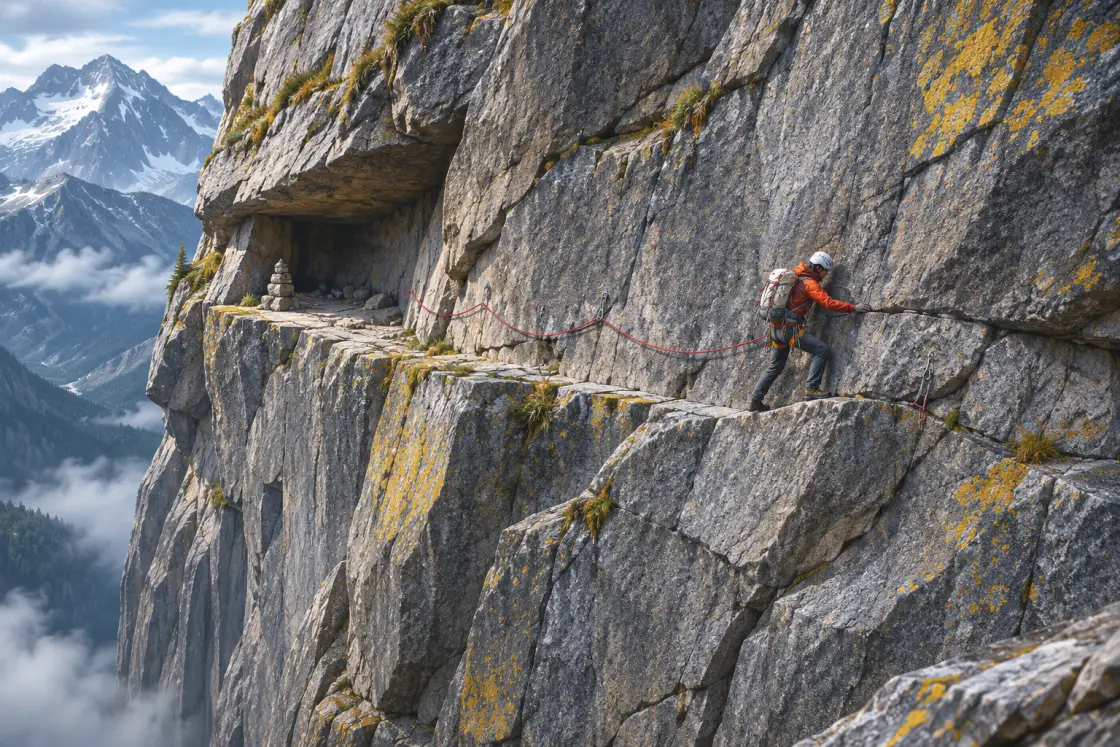
Compare the first readings
A useful protection point is a clue to what happens if the move cannot be completed. If the player sees only its distance from the next hold, the design hides its purpose. Show how it relates to the stance and the direction of a possible return.
Repeat the study with cloud covering the top of the pitch. The choice now depends on which part of the route remains visible. A cue that works only with the summit in view needs a second reference lower on the rock.
Compare what the player can read from two stances
At the lower stance, a crack leads toward a high ledge, and a rough edge remains visible below it. Give the player time to examine both. On a move to the upper stance, the crack may become clearer while the rough edge disappears. That change matters for descent. The card should show which of the two cues the player expects to find again when looking down the route.
In a second run, add cloud before the next move rather than during it. The player can pause or select a lower route while both decisions still make sense. If the weather cue appears only once a move is underway, the route no longer tests whether the player can read the conditions. It tests whether they can recover from a surprise.
A route review should retain the stance, the protection the player planned to use and the route they considered for retreat. Keeping those facts available after a cautious return lets the next attempt begin with more knowledge. We can use a case like this to decide whether a cue needs more contrast, a better viewing angle or an earlier place in the route card.
In a final run, keep the rock clear but change the time remaining before the sky darkens. The direct line can still be readable and less useful if its next stance would be reached too late for a careful return. Put the expected time and the dependable landmark in different places on the card. This lets a player tell whether they are changing the route because a feature is hard to recognise or because they want to keep a margin for descent.
The early card can also record a route that the player considered and set aside. It is useful to know whether the lower line was rejected because of time, because a landmark was unclear, or because the previous stance offered a better return. The review should keep that reasoning beside the attempt that actually happened.
Explore Above the Cloud Line for the design context, or read the next study for a related decision.