
The Sheltered Notch
Choose a traverse that works both ways
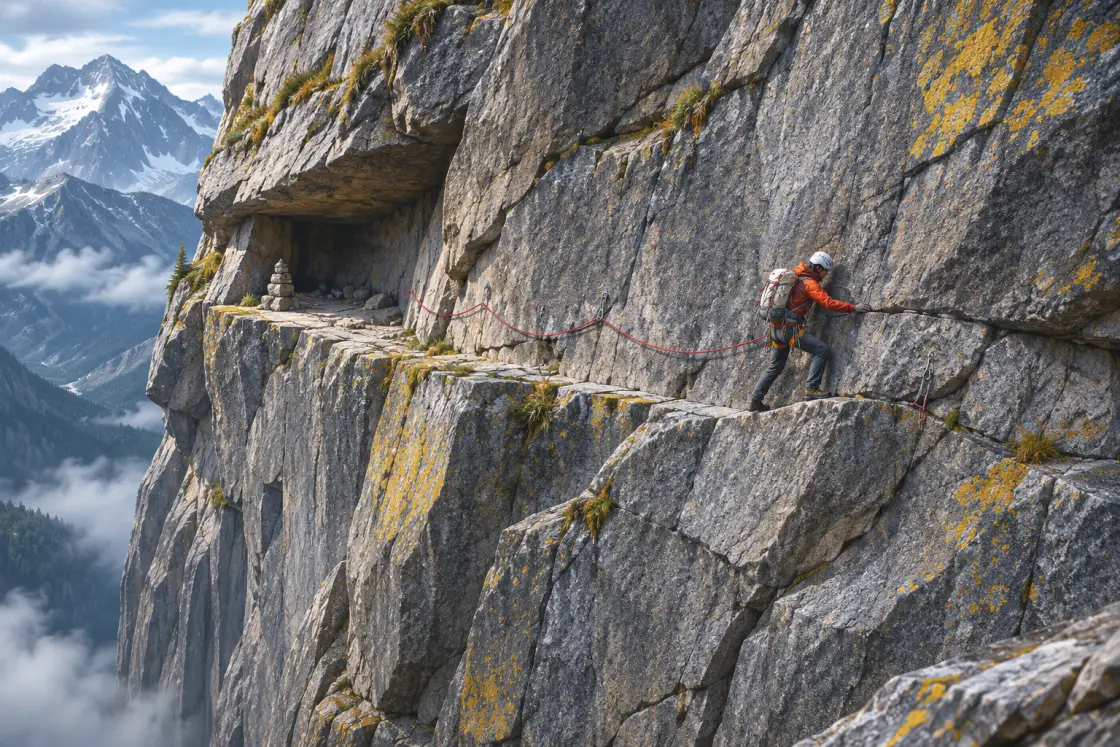
Two approaches meet above a sheltered notch. The high line offers a view across the ridge, while a lower traverse is easier to reverse but has fewer places to pause. The player can stop at the notch, check what has changed and decide whether to take the upper exit.
Run the short loop
From a secure stance, make a route card that names the next useful protection point and the last place you can return to easily. Traverse to the notch and compare the forecast with the local conditions. A gust across the exposed slab may make the descent more useful than the next pitch.
World and visual direction
We draw the notch as a change in depth rather than a change in colour alone. Side light separates the lip from the wall behind it, and the route illustration shows how the sheltered view differs from the high approach. The distinction has to survive on a small screen.
What the design has to explain
The design test compares choices that can look similar on a distance chart. The lower line might take longer but keep the return obvious. The higher line might save time until a cloud hides the next hold. Each should have a clear reason to choose it.
Development status
The Sheltered Notch is an early concept. We are studying retreat options and the information that a climber can carry from one side of the ridge to the other.
Look back before crossing the lip
The notch gives a player enough room to pause and look down the approach. From the inside, the exposed slab is partly hidden and the wind feels weaker. Place a reference near the lip that is visible from shelter. It can be a hanging rope, a clear fracture or a line of moving cloud beyond the slab. The player should know what the clue describes before the next move exposes them to the wind.
Try one return line along the low traverse and one using an anchor at the upper exit. The low traverse takes longer, but its next stance is visible. The upper route is shorter and becomes hard to read if the cloud lowers. A simple comparison can show which resource matters in each case: time on the lower line or reliable visibility on the upper one.
The route study ends when the climber reaches a place from which the remaining journey is clear. It does not have to end at the summit. We want a practical return to contribute a useful note about the notch and its approaches, so a future attempt begins with better information about what the route can offer under different conditions.
A second card for the lower return shows the same notch from a viewpoint that keeps the sheltered stance and the exposed lip visible together.
See Above the Cloud Line for another design study, or read the related development note.