
When the descent becomes the route
November 12, 2026
Design a descent with its own landmarks
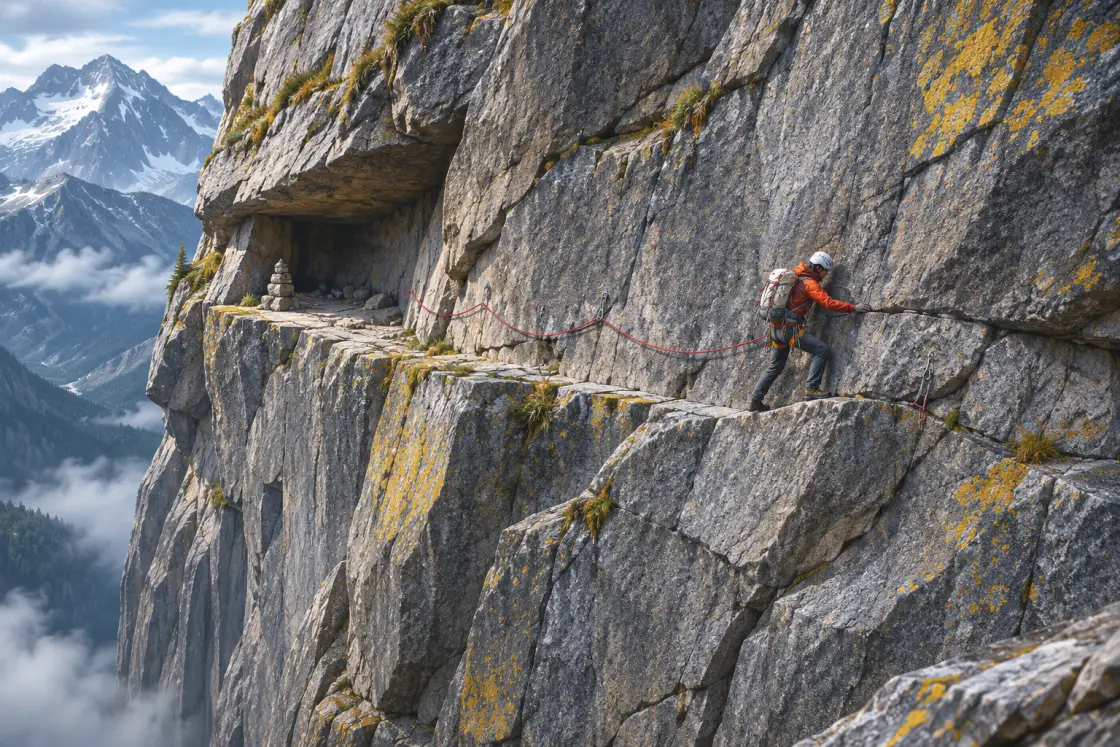
The initial card follows a narrow crack on the ascent. On the way down, the same crack disappears behind a lip and a broad patch of rough rock is easier to recognise. Treat the return as a route with its own views instead of reversing the arrows on the first drawing.
Change one condition
One descent reaches a sheltered ledge quickly but exposes the climber to a difficult turn near the bottom. The other takes longer and keeps the next anchor in sight. Compare them when the wind rises, then repeat the study when cloud lowers and the relative strengths change.
A good descent cue is visible while the climber still has a choice. We can shift the camera, add a close view of the anchor, or change the shape of the ledge. The test is whether a player can name what they expected to find at the next safe place.
We want a return to produce a useful entry in the Expedition Notes. The entry can record a hidden turn, a dependable point and a condition that would change the choice next time. Those facts make a short climb worth reviewing.
A return card needs a view from above
Place a distinctive seam on the ascent side of the ridge. It is a useful sign when approaching from below, but the upper face hides it during descent. The return card could use a different shape, such as a broad notch that stays visible beside the lower anchor. Compare what a player can see from the stance with what the chart expects them to see.
A second descent trial keeps the route the same and changes the direction of the wind. The faster line is still possible, but a wait at a narrow ledge becomes difficult to read. In the slower route, the next stance is visible before the player commits. Both can remain valid under different conditions if the card explains what makes the first one faster and what makes the other one easier to check.
At the end, ask which observation would change the choice next time. A report that says only that the climber descended gives no usable route knowledge. A note about which anchor was visible or where the rock went into shadow helps plan another pass. We want a descent to contribute that kind of evidence even when it was the simplest outcome of the day.
For the last comparison, remove the top landmark after the climber reaches the notch and keep both lower anchors visible. Give the player a chance to consult the return view before selecting either anchor. The route description should explain the sequence from the place where the player is standing, not in the order the same features were encountered on the way up. A small route card can show the next stance, an identifying edge and the turn where the original approach comes back into view. If a player can follow it with the summit out of sight, the descent has enough information to stand on its own. That also gives the illustrator a clear brief: draw the feature in the direction it will be used.
Try placing the final route choice one stance earlier. A useful return card can give the player time to recognise the lower notch and choose a line before the original path is lost behind the edge.
Explore The Sheltered Notch for the design context, or read the next study for a related decision.